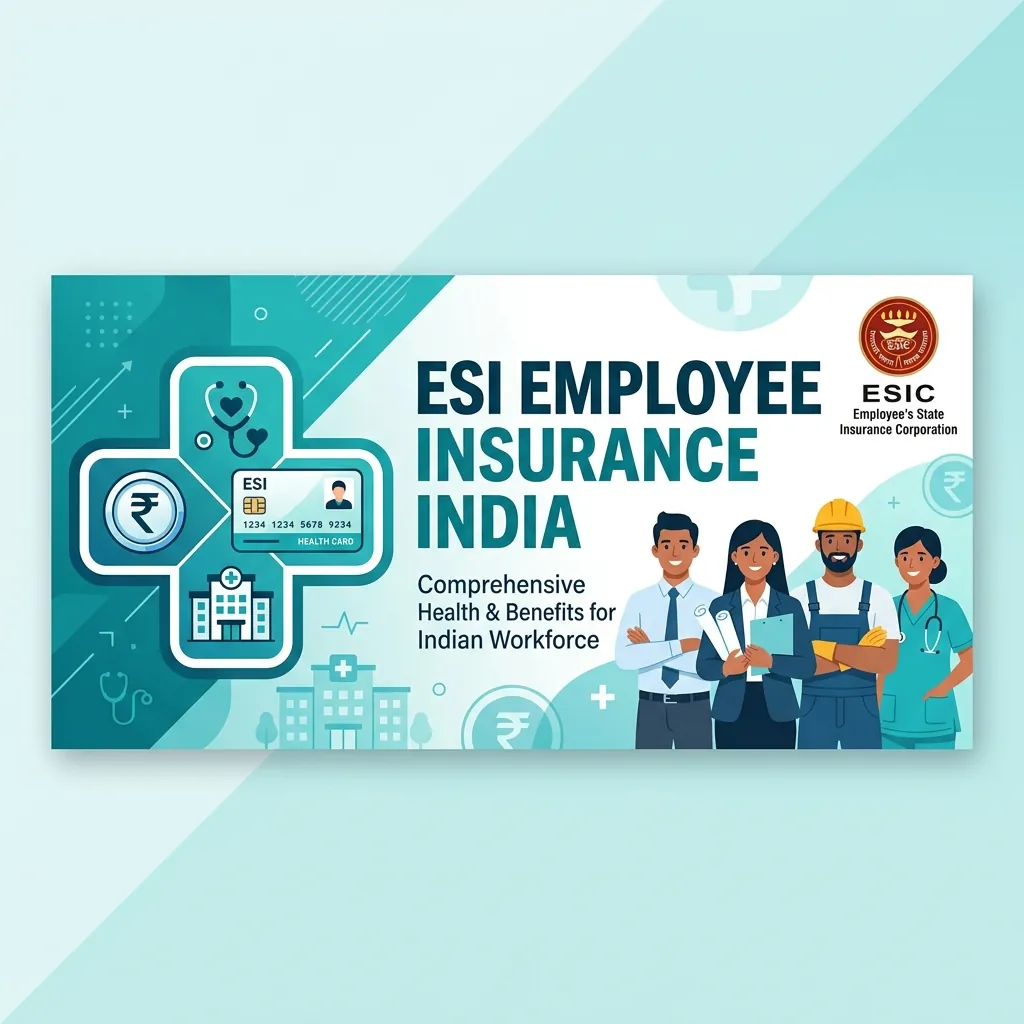
Employees' State Insurance (ESI) is a social security scheme that provides medical, disability, and maternity benefits to Indian employees. For businesses that meet the employee threshold, ESI registration and contribution is mandatory.
Here is everything you need to know about ESI rates, eligibility, and compliance for 2025-26.
ESI Contribution Rates (2025-26)
| Contributor | Rate | |---|---| | Employee | 0.75% of gross salary | | Employer | 3.25% of gross salary | | Total | 4.00% of gross salary |
ESI is calculated on gross salary (including overtime, but excluding some components like annual bonus and retrenchment compensation).
Who Needs to Pay ESI?
Employer Eligibility
Any establishment with 10 or more employees (in some states, 20 or more) must register with the ESIC and make contributions.
Employee Eligibility
ESI applies to employees earning up to ₹21,000 per month (₹25,000 for employees with disability). If an employee's salary exceeds this ceiling, they become exempt from ESI.
Important: Coverage Period
Once an employee is covered under ESI, they remain covered for the entire contribution period (April-September or October-March) even if their salary crosses ₹21,000 during that period.
ESI Calculation: Practical Example
Employee gross salary: ₹18,000/month
| Component | Calculation | Amount | |---|---|---| | Employee ESI | 0.75% × 18,000 | ₹135 | | Employer ESI | 3.25% × 18,000 | ₹585 | | Total ESI | | ₹720 |
The employee's ₹135 is deducted from their salary. The employer pays ₹585 from their own pocket.
ESI Benefits Employees Receive
Understanding the benefits helps you explain the scheme to your employees:
1. Medical Benefit
Full medical care for the employee and their family members at ESI hospitals and dispensaries. This includes outpatient treatment, hospitalisation, and specialist consultations.
2. Sickness Benefit
Cash compensation at 70% of wages for up to 91 days in a year when an employee is certified sick and unable to work.
3. Maternity Benefit
Women employees get full wages for 26 weeks of maternity leave, paid through the ESI scheme (not directly by the employer if ESI applicable).
4. Disability Benefit
- Temporary disability: 90% of wages during the period of disability.
- Permanent disability: Monthly pension based on the extent of disability.
5. Dependent Benefit
In case of death due to employment injury, dependents receive a monthly pension equal to 90% of the employee's average daily wages.
6. Funeral Expenses
A lump sum of ₹15,000 is paid to the family or the person who performs the funeral.
Filing and Due Dates
| Action | Due Date | |---|---| | Monthly ESI contribution | 15th of the following month | | Six-monthly return | 12th May (Oct-Mar period) and 12th November (Apr-Sep period) |
Late Payment Penalty
ESIC charges simple interest at 12% per annum on delayed contributions. In extreme cases, damages of up to 25% can be imposed.
Common Compliance Mistakes
1. Incorrect Salary Base
ESI is calculated on gross salary, not just basic salary. Many employers mistakenly use basic salary and face penalty during audits.
2. Not Adding New Employees
Every new employee earning below ₹21,000 must be registered with ESIC within 10 days of joining. Missing this is a compliance violation.
3. Ignoring Seasonal Workers
Contract and seasonal workers who meet the salary criteria must also be covered under ESI. This is a common area of non-compliance.
4. Continuing Contribution After Exemption
When employee salary crosses ₹21,000, they remain covered till the end of the current contribution period. But stop deducting from the next contribution period.
ESI vs Private Health Insurance
| Factor | ESI | Private Insurance | |---|---|---| | Cost to employer | 3.25% of salary | ₹5,000-15,000/year per employee | | Coverage | Employee + family | Depends on policy | | Hospital choice | ESI panel hospitals | Network hospitals | | Maternity | Included (26 weeks) | Usually limited | | Disability pension | Included | Not covered |
For employees earning below ₹21,000, ESI is a comprehensive safety net that most private insurance plans cannot match — especially for maternity and disability coverage.
How HRMS Software Helps with ESI Compliance
- Automatic identification: The software flags employees eligible for ESI based on salary thresholds.
- Correct calculation: ESI is computed on gross salary automatically — no manual errors.
- Challan generation: Generate ESI challans directly for payment.
- Compliance tracking: Automated reminders for filing deadlines.
Conclusion
ESI compliance is straightforward but the penalties for non-compliance are significant. The key areas to get right are: identifying eligible employees, calculating on the correct salary base, and filing on time. Using automated payroll software eliminates most errors in this process.
Explore XoMB HR's payroll features with built-in ESI calculation and compliance management.