Manual attendance systems are a thing of the past. From buddy punching to time theft, the problems with traditional methods are well known to every HR manager. Face recognition attendance systems have emerged as a practical and affordable solution — especially for Indian businesses that need reliability and compliance without breaking the bank.
In this guide, we will walk you through how face recognition attendance actually works, what benefits it brings, and what you should look for when choosing a system for your company.
How Face Recognition Attendance Works
At its core, face recognition uses artificial intelligence to identify a person by analysing their facial features. Here's the process in simple terms:
-
Enrolment: Each employee registers their face by looking at a camera. The system captures multiple angles and stores a mathematical representation (called a "face embedding") — not the actual photo.
-
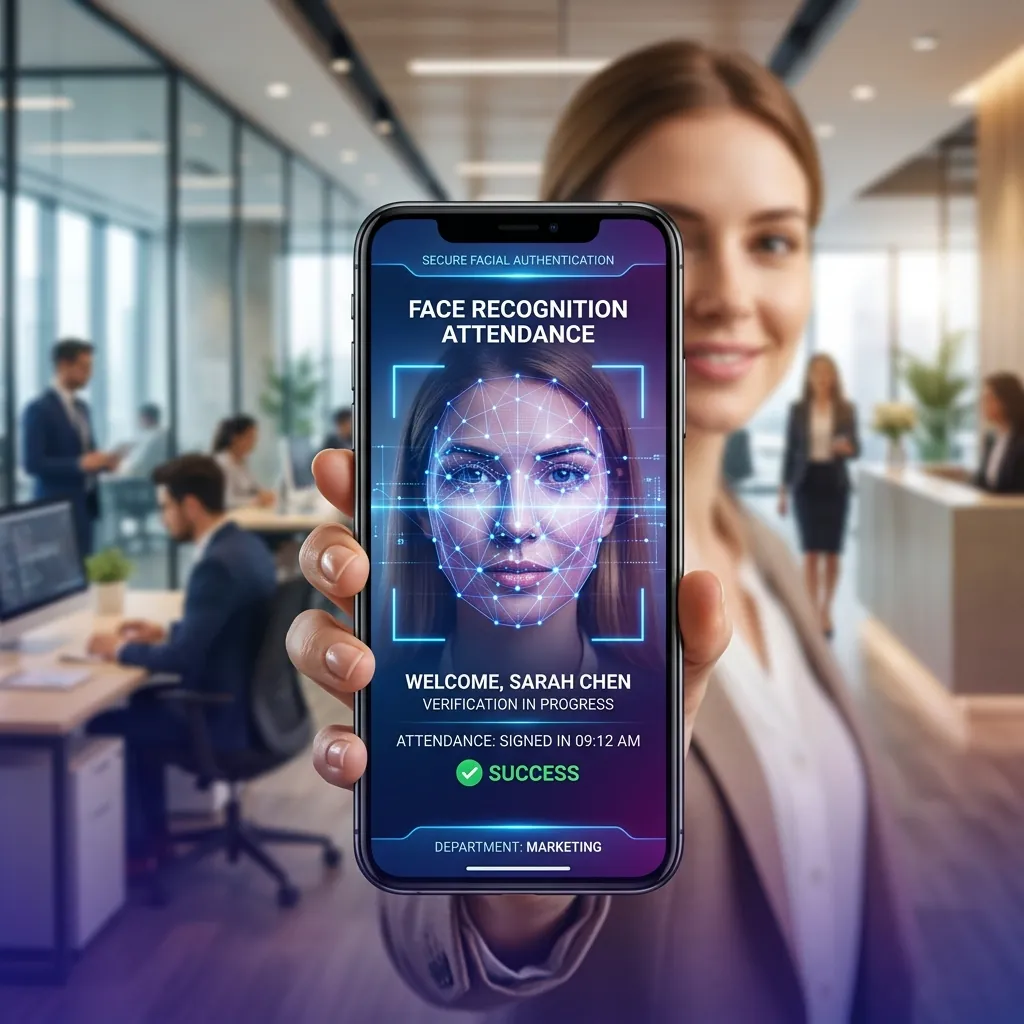
Verification: When an employee arrives at work, they look at the camera. The system compares the live face against the stored embeddings and confirms identity within 1-2 seconds.
-
Anti-Spoofing: Modern systems include liveness detection that can tell the difference between a real person and a photograph or video being held up to the camera. This prevents cheating.
-
Record Logging: Once identity is confirmed, the system automatically logs the time, date, and location of the punch.
The entire process is touchless, which became a significant advantage during and after the Covid-19 pandemic.
Why Indian Businesses Are Adopting Face Recognition
1. Elimination of Buddy Punching
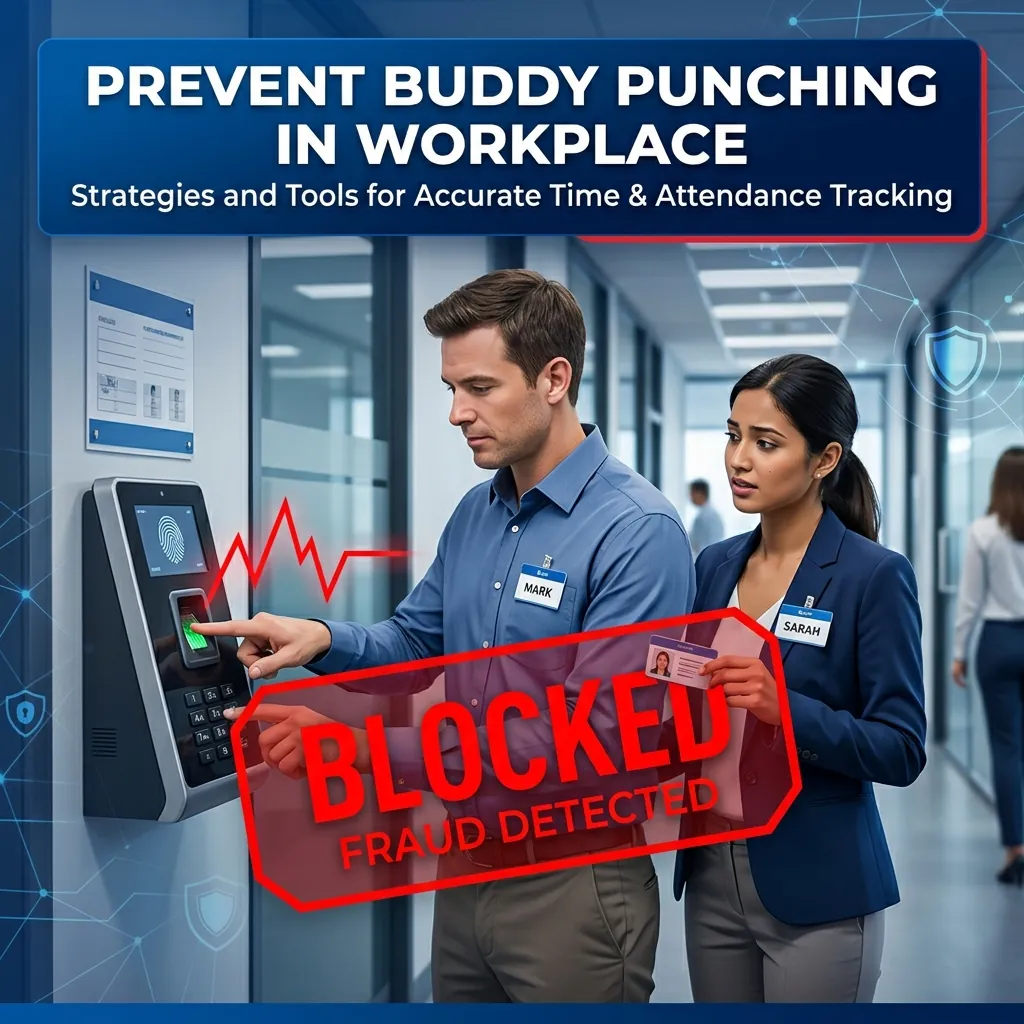
Buddy punching — where one employee clocks in on behalf of another — costs Indian businesses thousands of crores annually. With face recognition, only the actual employee can mark their attendance. There is no card to share, no PIN to reveal.
2. No Hardware Investment
Unlike fingerprint scanners or RFID card readers, face recognition can run on a standard smartphone or tablet. This dramatically reduces the setup cost. A company with 50 employees can start using face recognition attendance for the cost of a budget Android phone.
3. Contactless Operation
Post-pandemic hygiene awareness made fingerprint scanners problematic in many workplaces. Face recognition solves this entirely — employees do not need to touch any surface.
4. Works in Indian Conditions
Good face recognition systems are designed to work in varying light conditions, which is critical for Indian workplaces ranging from air-conditioned offices to open warehouse floors. Modern AI models handle these variations effectively.
5. Compliance Ready
Automated attendance records make it much easier to comply with Indian labour laws around overtime tracking, minimum working hours, and shift management. Digitised records are auditable and tamper-proof.
What to Look for in a Face Recognition Attendance System
When evaluating a system for your business, pay attention to these factors:
- Accuracy: Look for systems with 99%+ recognition rates. Low accuracy means frustrated employees and missed punches.
- Anti-Spoofing: Ensure the system has liveness detection. Without it, someone could use a photo to check in.
- Offline Capability: In India, internet connectivity is not always reliable. Choose a system that works offline and syncs later.
- GPS Integration: For field workers, the system should capture GPS coordinates along with the face scan to verify location.
- Privacy: Face data should be encrypted and stored securely. Ask the vendor where data is stored and who has access.
- Integration: The system should connect with your existing payroll and HRMS software to automate salary calculations.
Face Recognition vs Other Attendance Methods
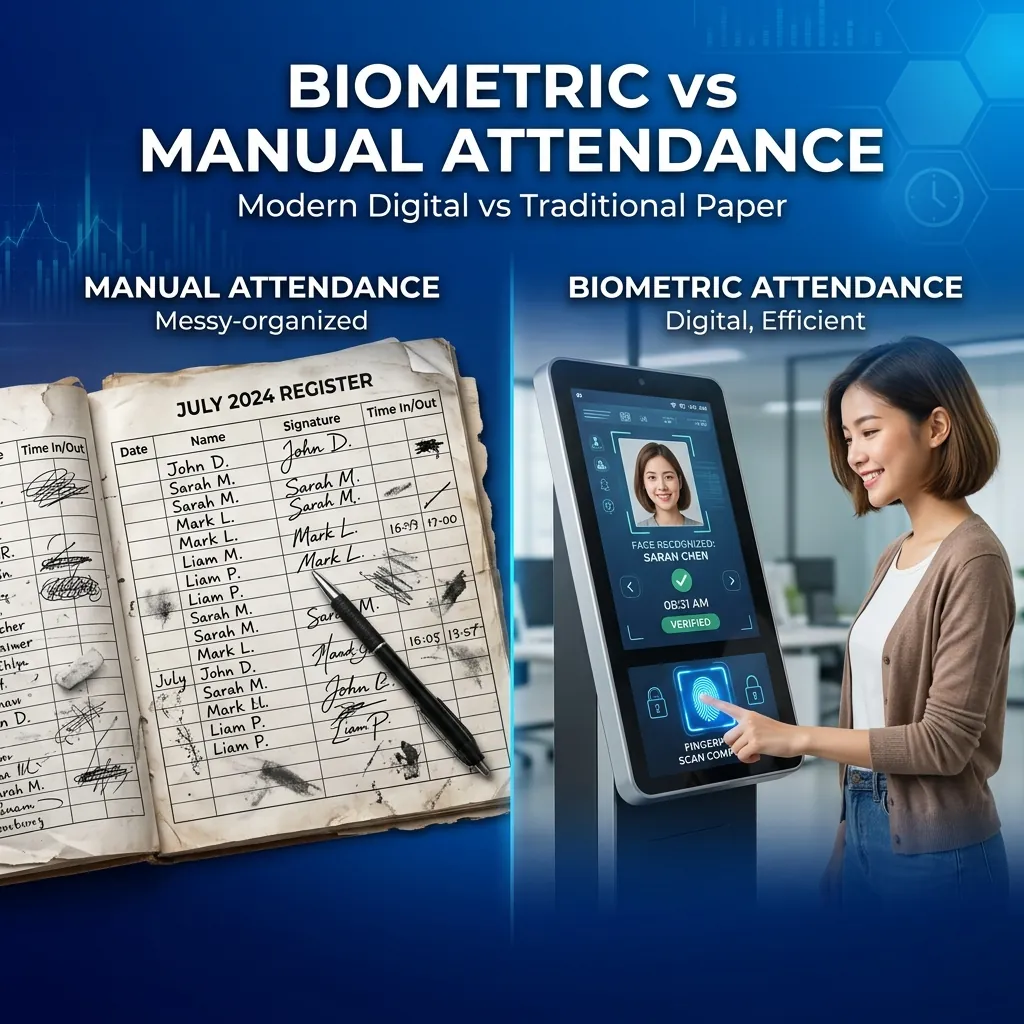
| Method | Buddy Punching | Cost | Hygiene | Speed | |---|---|---|---|---| | Manual Register | Easy to cheat | Very Low | No issue | Slow | | RFID / Smart Card | Card sharing possible | Medium | No issue | Fast | | Fingerprint | Difficult to cheat | Medium | Hygiene concern | Fast | | Face Recognition | Impossible | Low | Contactless | Fastest |
Implementation Tips
If you are planning to implement face recognition attendance, here are some practical tips:
-
Start with a pilot: Roll out the system in one department first. Collect feedback and resolve issues before company-wide deployment.
-
Communicate with employees: Explain the purpose — it is about accuracy, not surveillance. Address privacy concerns upfront.
-
Ensure good lighting: While modern systems handle low light, having decent lighting at the check-in point improves speed and accuracy.
-
Keep the registration process smooth: Take 3-4 photos from slightly different angles during enrolment for better accuracy.
-
Choose mobile-first if you have field staff: If employees work across multiple locations, a mobile app with face recognition is more practical than a fixed terminal.
The Future of Face Recognition in Indian Workplaces
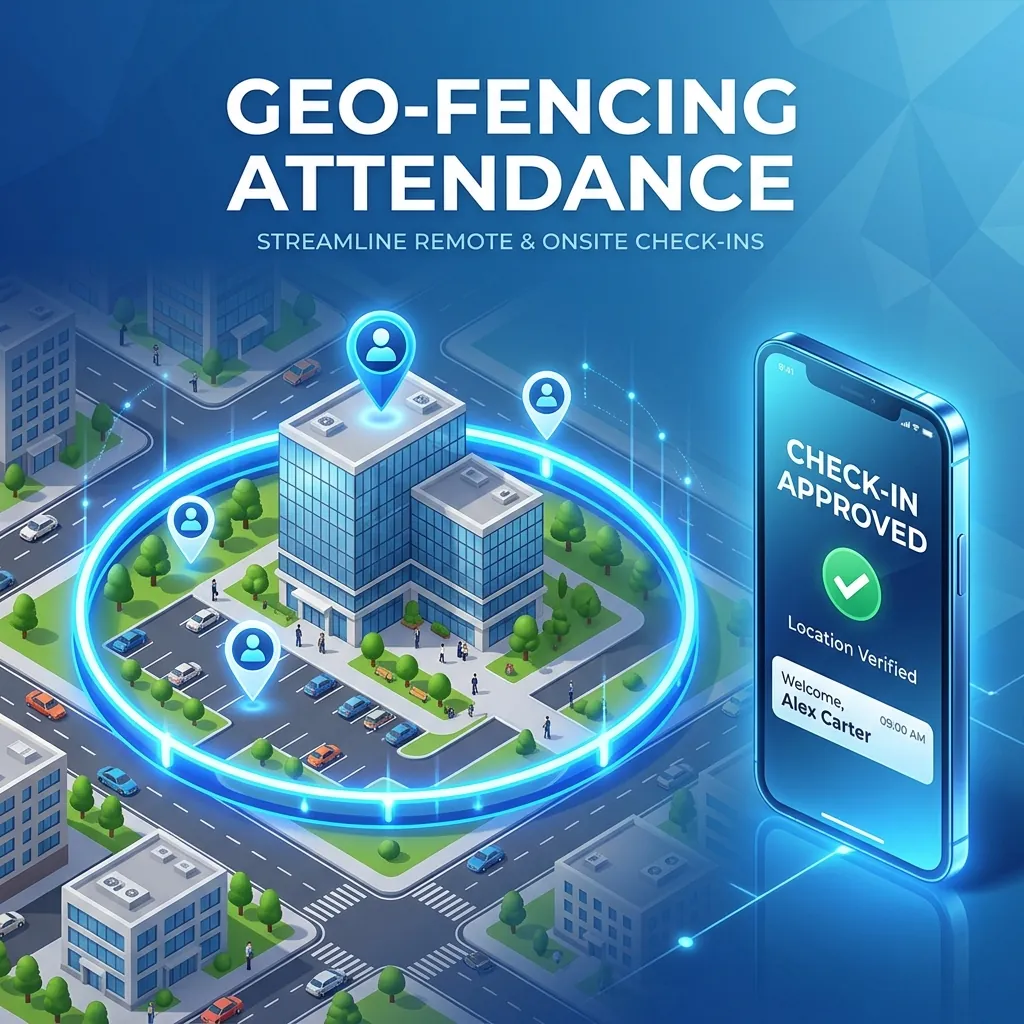
The technology is evolving rapidly. We are already seeing face recognition combined with geo-fencing (virtual boundary enforcement) and geo-tagging (GPS location stamping) for multi-layered attendance verification. Companies with distributed teams across Indian cities are finding this combination particularly useful.
As the cost continues to drop and accuracy improves, face recognition will become the standard attendance method for Indian businesses of all sizes — from 10-person startups to 10,000-employee enterprises.
Conclusion
Face recognition attendance is not just a technology upgrade — it is a practical solution to real problems that Indian businesses face every day. It eliminates buddy punching, reduces costs, improves compliance, and gives HR teams accurate data to work with.
If you are still using manual registers or basic biometric systems, it might be time to explore what face recognition can do for your organisation.
Explore XoMB HR's face recognition mobile attendance to see how it works for Indian businesses.