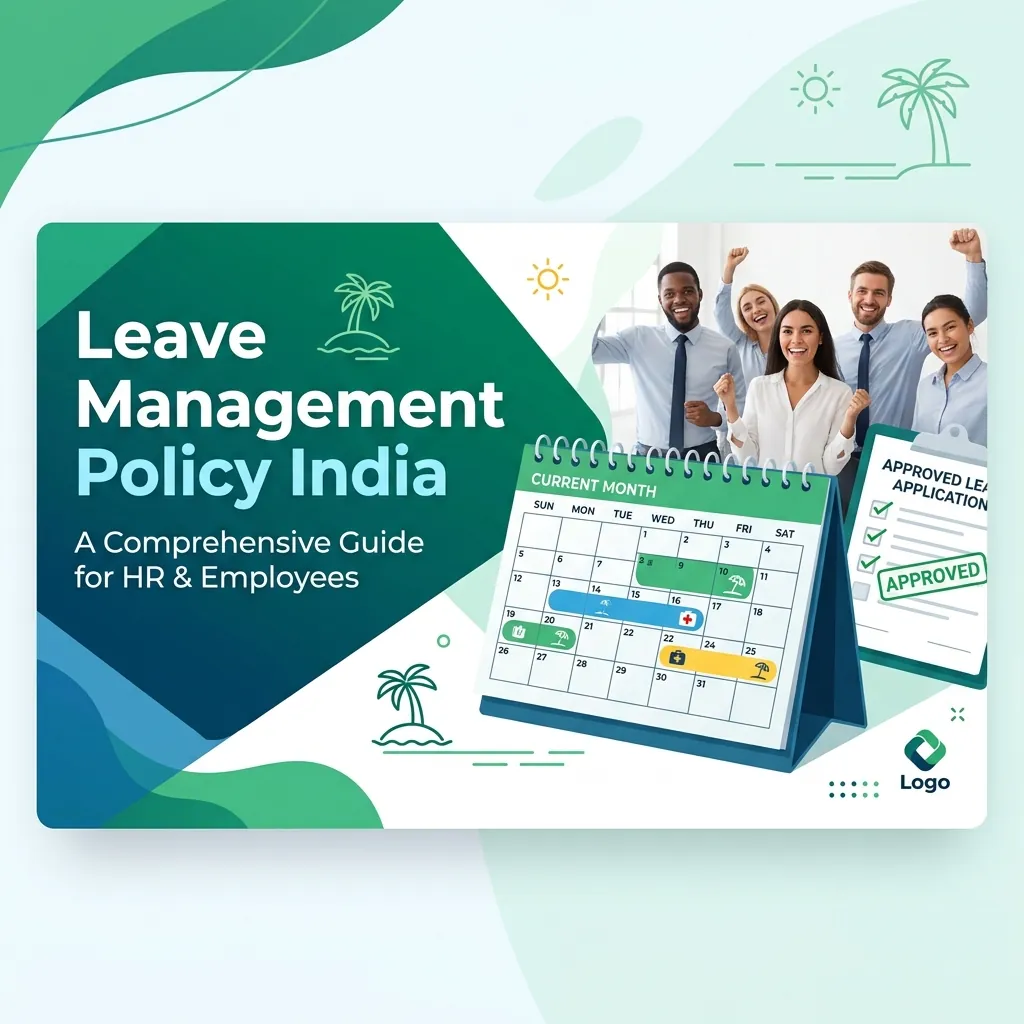
A well-designed leave policy does two things: it keeps your company legally compliant and keeps your employees satisfied. A badly designed one creates confusion, disputes, and legal risk.
For Indian companies, leave management is complicated by the fact that leave entitlements vary by state, industry, and establishment type. Here is a practical guide to getting it right.
Types of Leave Every Indian Company Should Offer
1. Earned Leave (EL) / Privilege Leave (PL)
Employees earn these leaves progressively during the year for use in subsequent periods.
- Entitlement: Varies by state (typically 1 day for every 20 days worked, which means roughly 15-18 days per year)
- Carry forward: Usually allowed, subject to a maximum accumulation limit
- Encashment: Must be offered for unused earned leave at the time of separation
2. Casual Leave (CL)
For short, unplanned absences — illness, personal emergencies, or other unforeseen circumstances.
- Entitlement: Typically 7-12 days per year (state-dependent)
- Carry forward: Usually not allowed — expires at year-end
- Cannot be clubbed: In most states, CL cannot be combined with other leave types
3. Sick Leave (SL)
Specifically for health-related absences.
- Entitlement: 7-12 days per year (state-dependent)
- Medical certificate: Many companies require a medical certificate for sick leave exceeding 2-3 consecutive days
- Carry forward: Varies by state — some allow, some do not
4. Maternity Leave
Governed by the Maternity Benefit Act, 2017.
- Duration: 26 weeks for first two children; 12 weeks for subsequent children
- Eligibility: Employee must have worked at least 80 days in the 12 months preceding the expected delivery date
- Payment: Full wages during the leave period
5. Paternity Leave
Not mandated by central law but increasingly offered by progressive companies.
- Industry standard: 5-15 days
- Best practice: Offer at least 5 days of paid paternity leave
6. Compensatory Off
Given when employees work on holidays or weekends.
- Best practice: Allow employees to use compensatory offs within 30-60 days
- Track carefully: These can accumulate and cause scheduling conflicts if not managed
Designing Your Leave Policy: Practical Framework
Step 1: Know Your State Rules
Leave entitlements are governed by your state's Shops and Establishments Act or the Factories Act. Check the specific rules for:
- Minimum earned leave entitlement
- Casual leave and sick leave minimums
- Leave accumulation and encashment rules
- Maternity benefit applicability
Step 2: Define Clear Categories
Keep leave categories simple. Employees should not need an HR handbook to understand what type of leave to apply for. Four to five categories are sufficient for most companies:
- Earned Leave
- Casual Leave
- Sick Leave
- Maternity/Paternity Leave
- Compensatory Off
Step 3: Set the Approval Workflow
Define who approves leave and how:
- Self-service application: Employees apply through the HRMS portal or mobile app
- Manager approval: Direct manager approves or rejects with one click
- Multi-level approval: Optional second-level approval for extended leaves (5+ days)
- Auto-approval: Some companies auto-approve casual leave under 2 days
Step 4: Define Notice Periods
- Planned leave (EL): Require 7-15 days advance notice
- Urgent leave (CL): Allow same-day application with notification to manager
- Sick leave: Allow post-facto application within 1-2 days of returning
Step 5: Handle Edge Cases
Write policies for situations that will inevitably arise:
- What happens when an employee exhausts all leave? (Loss of pay)
- Can employees take half-day leave?
- What about work-from-home vs leave?
- How is leave handled during notice period?
Common Leave Policy Mistakes
1. Use-It-or-Lose-It Without Encashment
If you do not allow carry forward, you must offer encashment for unused earned leave. The law mandates this in most states.
2. No Written Policy
Verbal policies lead to disputes. Document your leave policy and have every employee acknowledge it in writing.
3. Inconsistent Application
Approving leave casually for some employees while being strict with others creates legal risk and morale issues. Apply the same rules to everyone.
4. Manual Leave Tracking
Tracking leave on spreadsheets is error-prone and time-consuming. It is the single biggest source of payroll disputes in Indian SMEs.
5. Ignoring Sandwich Rule
The "sandwich rule" — where weekends or holidays between two leave days are counted as leave — should be clearly stated in your policy. Ambiguity here creates friction.
Technology and Leave Management
Modern leave management software handles the complexity that manual processes cannot:
- Real-time leave balances: Employees check their balance before applying
- Mobile applications: Apply and approve leave from anywhere
- Automatic balance calculation: System handles accruals, carry forwards, and encashment
- Holiday calendar integration: Leaves are calculated considering public holidays
- Reports: Absenteeism patterns, team leave calendars, and balance reports
Conclusion
A good leave policy is specific, fair, compliant, and easy to understand. Do not overcomplicate it with dozens of leave types and conditions. Keep it simple, put it in writing, use software to enforce it consistently, and review it annually.
Explore XoMB HR's leave management module for automated leave tracking and approval workflows.